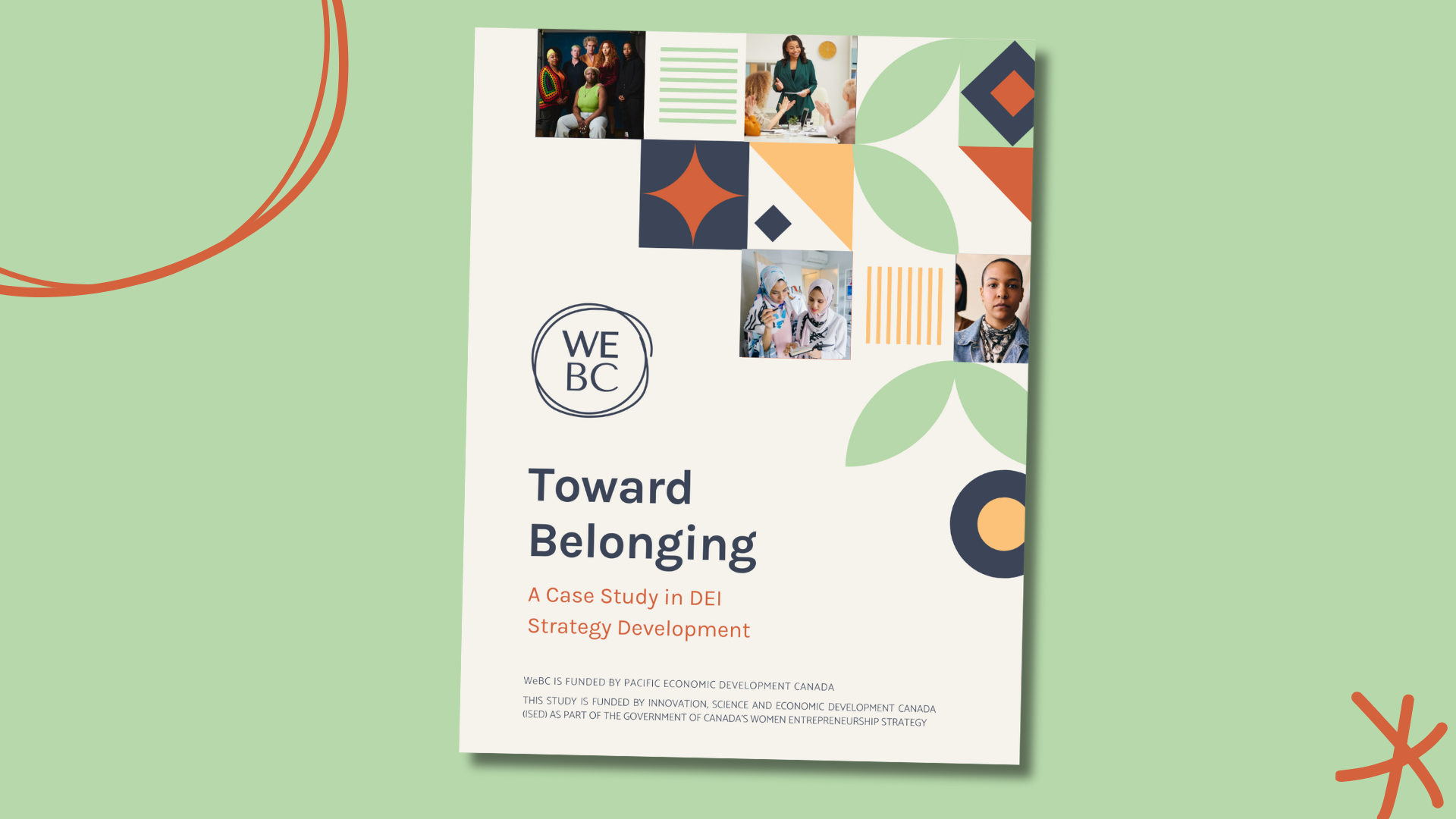
Entrepreneurs across British Columbia face a wide range of challenges—some visible, many not. At WeBC, we wanted to better understand what support looks like for those whose experiences are shaped by race, gender, culture, ability, and other intersecting identities.
In 2024, WeBC partnered with research and evaluation consultancy AND Implementation to listen deeply and learn from diverse entrepreneurs about what they need to feel supported in their business journeys, and how we can respond with programs and services that reflect their realities.
We share this report at a time when many organizations are being asked to scale back social justice efforts. Instead, WeBC offers this case study as an invitation to resist the pressure to back off of equity work: use it to spark conversation, promote co-learning, and explore what DEI could look like in your own organization. This is not a prescriptive toolkit, and we caution against replicating our approach without listening to your community and reflecting internally.
DEI work is complex, imperfect, and deeply personal to each organization, but it is necessary. We hope this report helps illuminate the resources required, especially the courage and humility it takes to change. We hope it inspires others to take action and encourages collective responsibility for change.
This DEI Case Study Report was created to share what we learned about the realities of advancing equity for women, non-binary, and gender diverse entrepreneurs across British Columbia, including limits we encountered along the way and work that still needs to be done.
Our process was shaped by the voices of entrepreneurs from priority groups—including Indigenous, immigrant, disabled, rural, and gender-diverse individuals—whose experiences and insights guided our recommendations and commitments.
The study was made possible through funding from Innovation, Science and Economic Development Canada (ISED) as part of the Government of Canada’s Women Entrepreneurship Strategy. Thanks to our funder for enabling us to dedicate resources to meaningful research, facilitated planning, and collective learning.
Cliquez ici pour télécharger ce rapport en français.